Hair Fall After Delivery: How Long It Lasts and What to Do
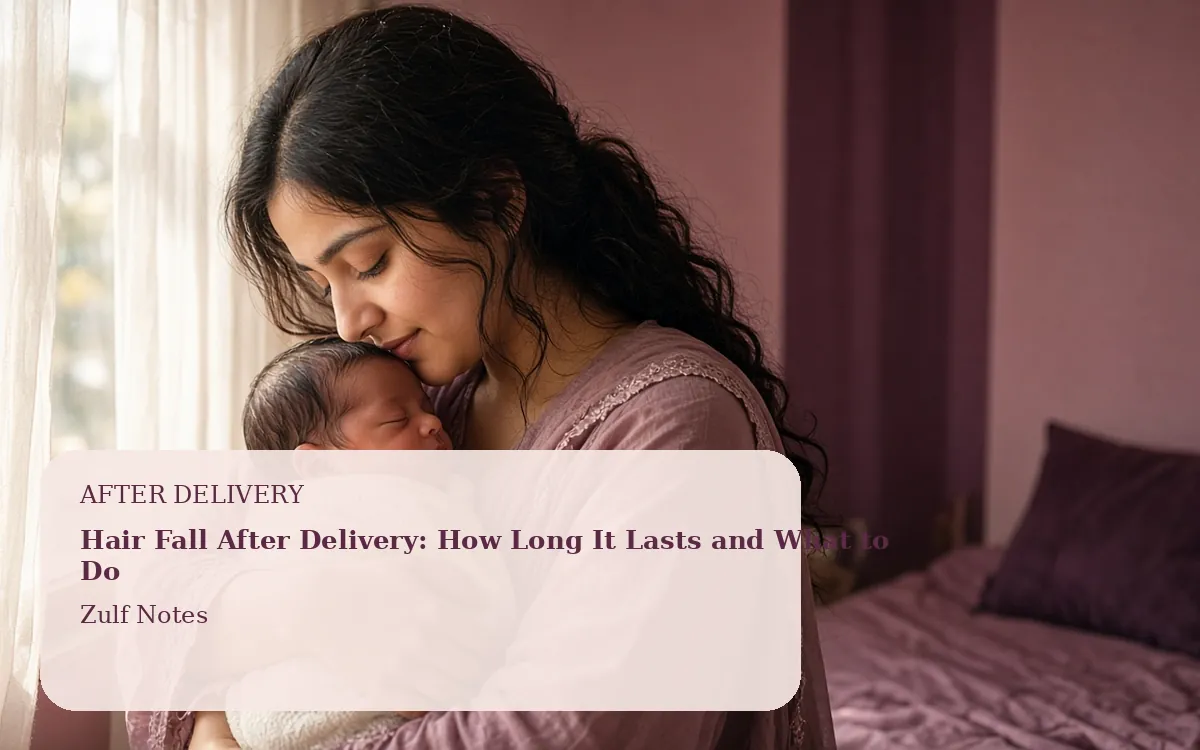
Short answer: hair fall after delivery is very common and usually temporary. It typically starts two to four months after your baby is born, peaks around month four, and settles for most women by the baby's first birthday. It is called postpartum telogen effluvium. If it continues beyond a year, or comes with exhaustion, feeling cold or a racing heart, ask your doctor to check your iron and thyroid.
Why it happens
During pregnancy, higher hormone levels keep more of your hairs in the growing phase. Many women notice their hair is thicker than ever. After delivery, hormone levels drop, and all those extra hairs move into the resting phase together. About two to three months later, they shed, all at once.
You're not losing more hair than you would have anyway. You're losing, in a few months, the hair that pregnancy "held on to." That's little comfort when you see it in the drain, but it does explain why it usually recovers.
How long does it last?
| Time after delivery | What's typical |
|---|---|
| 0 to 2 months | Hair looks normal |
| 2 to 4 months | Shedding starts. Hair in the shower, on the pillow, in the baby's fists |
| 4 to 6 months | Peak, then gradual slowing |
| 6 to 12 months | Short new hairs at the hairline ("baby hairs"), and volume improves |
| After 12 months | Most women are back to their usual density |
Some women notice their hair is a little thinner than before pregnancy, even after recovery. This can happen when female pattern thinning was already beginning. That's worth discussing with a dermatologist.
What can make it worse
- Iron deficiency. Blood loss during delivery, plus low iron stores going into pregnancy, is very common in Pakistan. Low ferritin is linked with heavier shedding.
- Thyroid problems after delivery. Postpartum thyroiditis affects some women in the first year.
- Poor sleep and stress, which every new mother knows about.
- Very restrictive dieting to lose the pregnancy weight quickly.
- Tight hairstyles such as tight buns or chotis, used to keep hair out of the way.
What actually helps
1. Eat enough, especially protein and iron
Breastfeeding raises your energy needs. Include protein at every meal (daal, eggs, chicken, fish, dahi, chana) and iron-rich foods (meat, daal, leafy greens). Vitamin C helps iron absorption. Ask your doctor before starting any supplement, because the right dose depends on your blood test.
2. Get blood tests if shedding is heavy
Ask your doctor about a complete blood count, ferritin and thyroid tests (TSH). These are simple tests and can find treatable causes.
3. Be gentle with hair
- Use a wide-tooth comb, and detangle from the ends upwards.
- Choose loose braids or soft scrunchies instead of tight elastic bands.
- Skip harsh treatments like rebonding or bleaching for now.
- Air-dry when you can.
4. Try a shorter or layered cut
Many mothers find a shoulder-length cut makes thinning less visible and makes hair easier to manage with a baby.
5. Give it time
There's no product that stops postpartum shedding, because it's driven by a hormonal shift that has already happened. The hair that's going to shed has already been "scheduled."
Treatments and breastfeeding
Many hair treatments, including minoxidil and some supplements, have not been well studied during breastfeeding, or are not advised. Always ask your doctor before using medicated products while breastfeeding. Gentle shampoo, conditioner and good nutrition are safe.
Myths you'll hear
- "Breastfeeding causes the hair fall." Shedding happens whether you breastfeed or not. It's the hormonal change after delivery.
- "Oiling every night will stop it." Oil can make hair softer and reduce breakage, but it won't stop the shedding.
- "Cut it all off and it will grow thicker." Cutting doesn't change the follicles.
- "You'll lose your hair permanently." For most women, it recovers.
Looking after yourself
Seeing your hair fall out when you're already exhausted can feel upsetting. It's a common reaction and nothing to be embarrassed about. Talk to your family or your doctor if you feel low for more than a couple of weeks. Postpartum depression is common and treatable.
See a doctor or dermatologist if…
- Shedding continues more than 12 months after delivery
- You have patches of baldness, or your parting is clearly widening
- You feel unusually tired, cold, breathless or have a racing heart
- Your periods are very heavy once they return
- Your scalp is itchy, scaly or sore
- You feel low or anxious for more than two weeks
Bottom line
Hair fall after delivery is common and usually temporary. Look after your nutrition, get your iron and thyroid checked if shedding is heavy, be gentle with your hair, and give it time. Read about iron and hair fall next.
General information only, not medical advice. See a dermatologist for hair loss or scalp conditions.