PCOS & Hormones
Thyroid and Hair Loss in Women: Signs to Watch
What causes hair fall in females with thyroid problems? Signs of hypothyroidism and hyperthyroidism, the tests, what recovery looks like, and when to see a doctor in Pakistan.
Notes for women in Pakistan
After delivery, with PCOS, low iron or a thyroid problem, or a parting that keeps getting wider: gentle explanations, the tests to ask your doctor for, and calm routines that make sense.
Start reading
What causes hair fall in females with thyroid problems? Signs of hypothyroidism and hyperthyroidism, the tests, what recovery looks like, and when to see a doctor in Pakistan.
Choosing a hair fall serum in Pakistan? How to read the label, which ingredients have evidence, red-flag claims, safety in pregnancy, and how to test a serum properly.
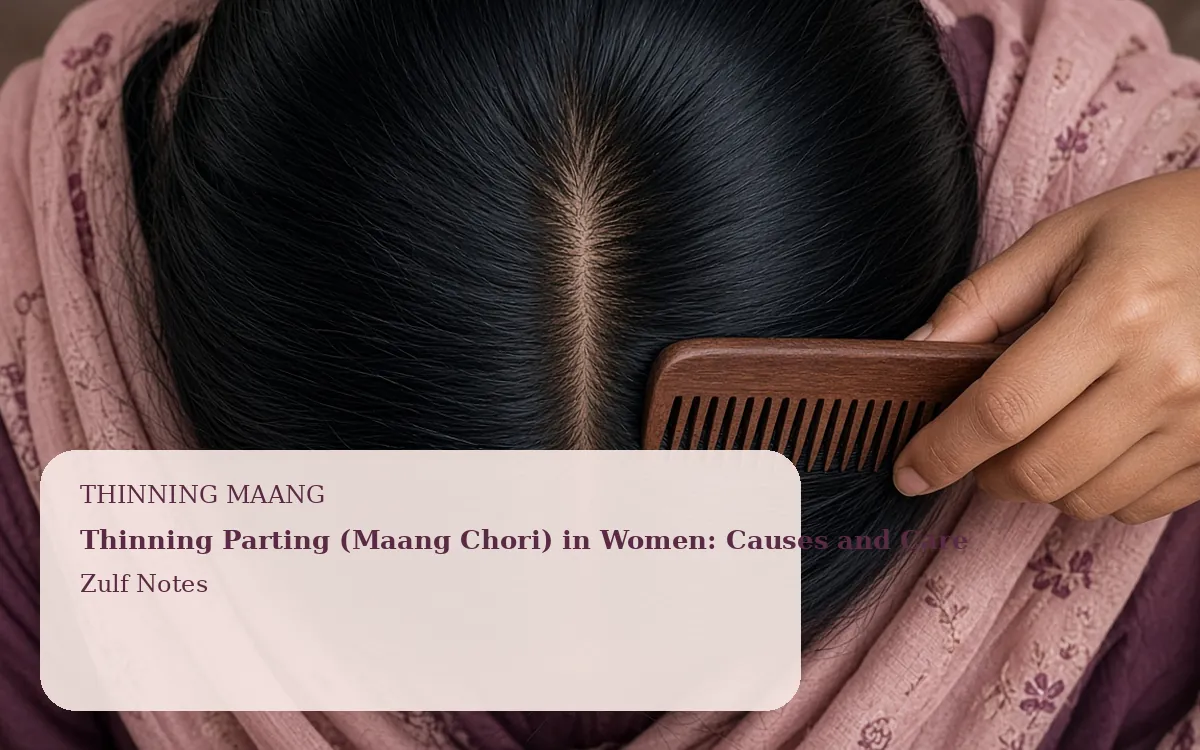
Is your maang getting wider? Causes of a thinning parting in women in Pakistan, how to check, treatments a dermatologist may suggest, styling tips and gentle routines.

Why do ladies' hair fall? Nine common causes of hair fall in women in Pakistan, roughly ranked from most to least common, with the signs of each and what to do.

Baal girna kaise roke when iron is low? Ferritin explained simply for women in Pakistan: symptoms, tests, food sources, supplements safely, and recovery time.

Looking for the best hair fall shampoo for women in Pakistan? What shampoo can and can't do, ingredients to look for by scalp type, and how to choose without the hype.

PCOS hair fall explained for women in Pakistan: why PCOS thins scalp hair, the tests to ask for, medical options, lifestyle steps, and what shampoos can't do.
Postpartum hair fall explained for new mothers in Pakistan: why it happens, how long it lasts, what helps, what to avoid while breastfeeding, and when to see a doctor.

A routine we'd try
Once you have checked iron, thyroid and hormones with a doctor, some women like to add a calm at-home scalp routine. Our featured kit pairs a hair serum with a derma roller and prep spray. It contains minoxidil 5%, which may help some people with pattern thinning over 3–6 months; early shedding is possible, it is not a cure, and it is not for pregnant or breastfeeding women. Consult a doctor first.
The serum + derma roller kit

Questions people search
Postpartum shedding usually starts two to four months after delivery and often settles by the baby's first birthday. If it continues beyond a year, or you also feel very tired, ask your doctor to check your iron and thyroid.
Yes. During pregnancy, many hairs stay in the growing phase. After delivery, they shed together. This is called telogen effluvium and is very common.
The most common reasons are shedding after delivery or illness, low iron, thyroid problems, PCOS, stress, crash diets and female pattern thinning. Tight hairstyles and harsh chemical treatments also play a part. Finding the cause matters more than changing shampoo.
PCOS-related thinning is driven by hormones, so it is managed through a gynaecologist or dermatologist. Topical treatments and, for some women, hormone-balancing medicines are used. Weight, sleep and diet support help. Shampoos and oils alone won't fix it.
Doctors commonly check a complete blood count, ferritin (iron stores), thyroid (TSH), vitamin D and B12, and sometimes hormone tests if PCOS is suspected. Your doctor will choose what is right for you.
Low iron stores (low ferritin) are linked with increased shedding, and iron deficiency is common among women in Pakistan. Only take iron supplements after a blood test and on a doctor's advice.