Why Ladies' Hair Falls: 9 Causes Ranked by How Common They Are

Short answer: in women, the most common causes of increased hair fall are temporary shedding after a trigger (delivery, illness, stress or dieting), low iron, female pattern thinning, thyroid problems, PCOS, scalp conditions and hairstyle damage. Often more than one is involved. The ranking below is a rough guide based on what dermatologists commonly see, not exact statistics.
First: how much hair fall is normal?
Losing around 50 to 100 hairs a day is normal. You'll notice more on wash days, because hairs that were already shed come out together. Hair fall becomes a concern if:
- you're seeing much more than usual for more than a few weeks
- your ponytail is thinner
- your parting (maang) looks wider
- you can see your scalp more easily
1. Telogen effluvium (shedding after a trigger)
What: sudden, diffuse shedding two to three months after delivery, high fever (typhoid, dengue, COVID), surgery, major stress or a crash diet. Signs: clumps in the shower, hair all over your pillow, and hair falling from all over the head. Outlook: usually recovers within six to nine months once the trigger has passed. Read: hair fall after delivery.
2. Iron deficiency (low ferritin)
What: low iron stores, very common in Pakistan. Signs: shedding along with tiredness, breathlessness or pale skin. Action: CBC and ferritin test. Read more.
3. Female pattern hair loss
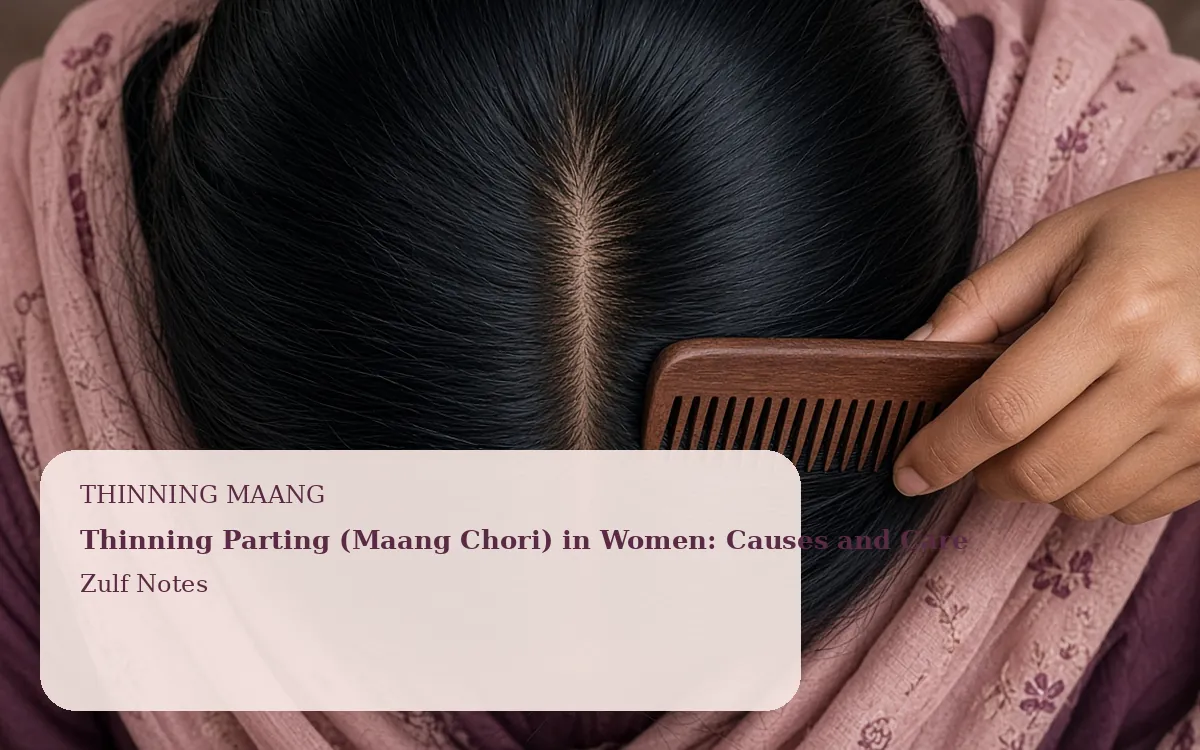
What: gradual, genetic and hormone-related thinning of follicles on the top of the head. Signs: a widening parting, more scalp showing on top, and a hairline that usually stays in place. Action: see a dermatologist early. Treatment works better before thinning advances. Read about a thinning maang.
4. Thyroid disorders
What: both underactive and overactive thyroid can cause diffuse hair loss. Signs: weight change, tiredness, feeling cold or hot, dry skin, period changes. Action: TSH test. Read more.
5. PCOS
What: a hormonal condition that can thin scalp hair through androgens. Signs: irregular periods, acne, extra facial hair, weight gain. Action: see a gynaecologist or dermatologist. Read more.
6. Dandruff and scalp inflammation
What: dandruff, seborrheic dermatitis or psoriasis. Signs: itching, flakes, redness. Scratching causes breakage. Action: an anti-dandruff shampoo with the right active ingredient, or a dermatologist if it's severe.
7. Breakage from styling and chemicals
What: hair snapping along the shaft rather than falling from the root. Signs: short broken pieces, split ends, rough texture, often after rebonding, keratin treatments, bleaching, daily straightening or tight hairstyles. Action: cut back on heat and chemicals, condition well and choose loose styles. Long-term tight pulling (traction alopecia) can cause permanent loss at the temples.
8. Nutritional gaps and crash diets
What: too little protein, very low calories, or deficiencies in vitamin D, B12 or zinc. Signs: shedding two to three months after a diet started, plus fatigue. Action: balanced meals, and blood tests rather than guessing with supplements. Too much vitamin A or selenium can also cause hair loss.
9. Less common causes
- Alopecia areata: sudden round, smooth bald patches.
- Medicines: some blood pressure medicines, retinoids, chemotherapy and others.
- Fungal infection (tinea capitis): scaling patches with broken hairs, more common in children.
- Scarring alopecias: rare, but they need urgent care. Signs include shiny skin, pain or burning.
Often it's more than one cause
A common story in Pakistan is a woman who has had two deliveries close together, has low ferritin and is under stress. Each factor adds to the shedding. Fixing one helps, and fixing all of them helps most.
A simple first-step checklist
- Note when the hair fall started and what happened two to three months before that.
- Look at your parting in a photo and compare it with an older photo.
- Book a doctor's visit and ask about CBC, ferritin, TSH and vitamin D.
- Switch to gentle styling for now.
- Make sure you're eating enough protein.
Quick answers
Does washing hair daily cause hair fall? No. The hairs you see while washing were already shed and were simply released together.
Can hijab or dupatta cause hair fall? Covering your hair doesn't cause hair loss. Very tight under-scarves worn in the same position every day can cause friction and traction, so keep them comfortable, and let your hair dry before covering it.
See a dermatologist if…
- Your parting is getting wider, or your scalp is showing more
- Shedding has lasted more than three months
- You have bald patches, scaling, redness or pain
- There's hair loss together with irregular periods, acne or facial hair growth
- Your eyebrows or eyelashes are thinning too
Bottom line
Ladies' hair falls for many reasons, and most of them can be identified. Start with timing (what happened two to three months ago?) and simple blood tests, be gentle with your hair, and see a dermatologist early if your parting is widening.
General information only, not medical advice. See a dermatologist for hair loss or scalp conditions.